Digital Sovereignty and the Role of SMSF in 5G Core Networks
- November 12, 2026
3 min read
Digital Sovereignty Has Moved from Policy Papers into Capital Budgets
Governments and regulators increasingly treat telecom core functions as critical infrastructure, and operators must be able to show who controls them.
Reuters reported that Telecom Italia expects to invest around €500 million in infrastructure and assets related to digital sovereignty between 2026 and 2028. The investment reflects a wider shift: governments and regulators increasingly treat telecom core functions as critical infrastructure, and operators must be able to show who controls them.
What Digital Sovereignty Means for Telecom Networks
Sovereignty in a network is not a single product decision. It touches on where data is processed, who can change the software, how quickly vulnerabilities are fixed, and how easily an operator can switch suppliers. Each of these depends on the design of the core.
As digital sovereignty becomes a greater consideration in telecom infrastructure investment, the architecture and ownership of individual core functions become increasingly important.
SMSF as a Core Network Function
The SMSF is one such core function. It handles SMS over the 5G control plane, and the decisions about how it is built and run affect the operator’s control over a service its subscribers depend on daily.
The Short Message Service Function (SMSF) provides an important role in enabling SMS services within 5G Standalone networks. Its position within the 5G control plane means that the way the function is developed, deployed, and managed can directly influence an operator’s infrastructure strategy and level of control.
Open Source and Greater Visibility
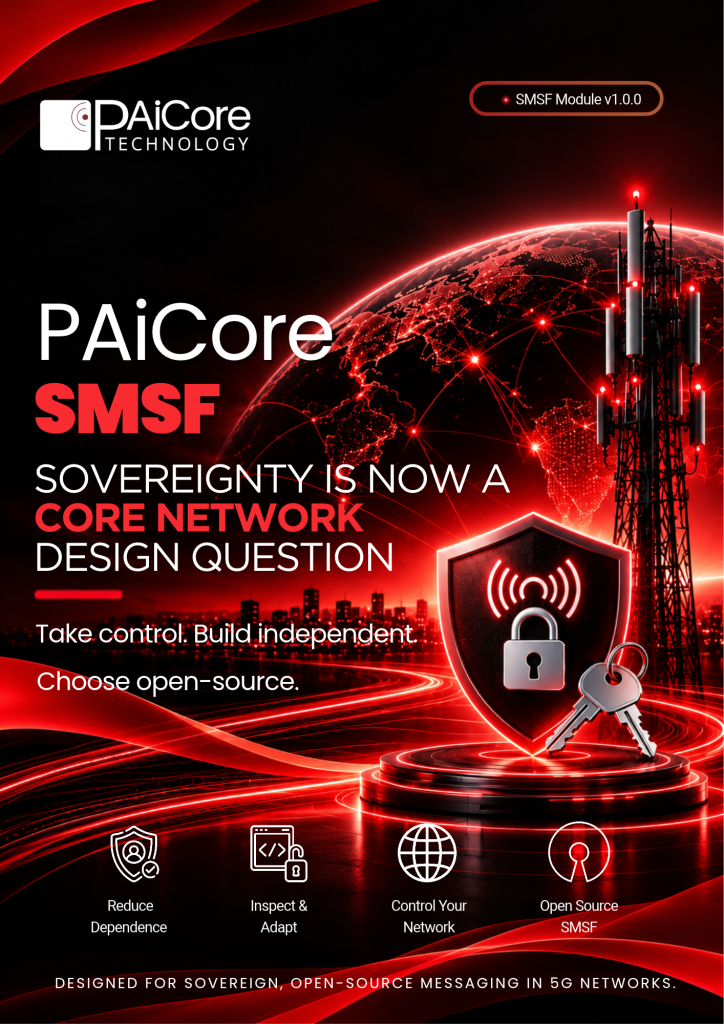
PAiCore’s SMSF Module v1.0.0 is open source and hosted publicly on GitHub, so operators and their engineers can inspect the implementation.
Open source provides visibility into the implementation and gives operators and engineering teams the ability to examine the software they are deploying within their network environment.
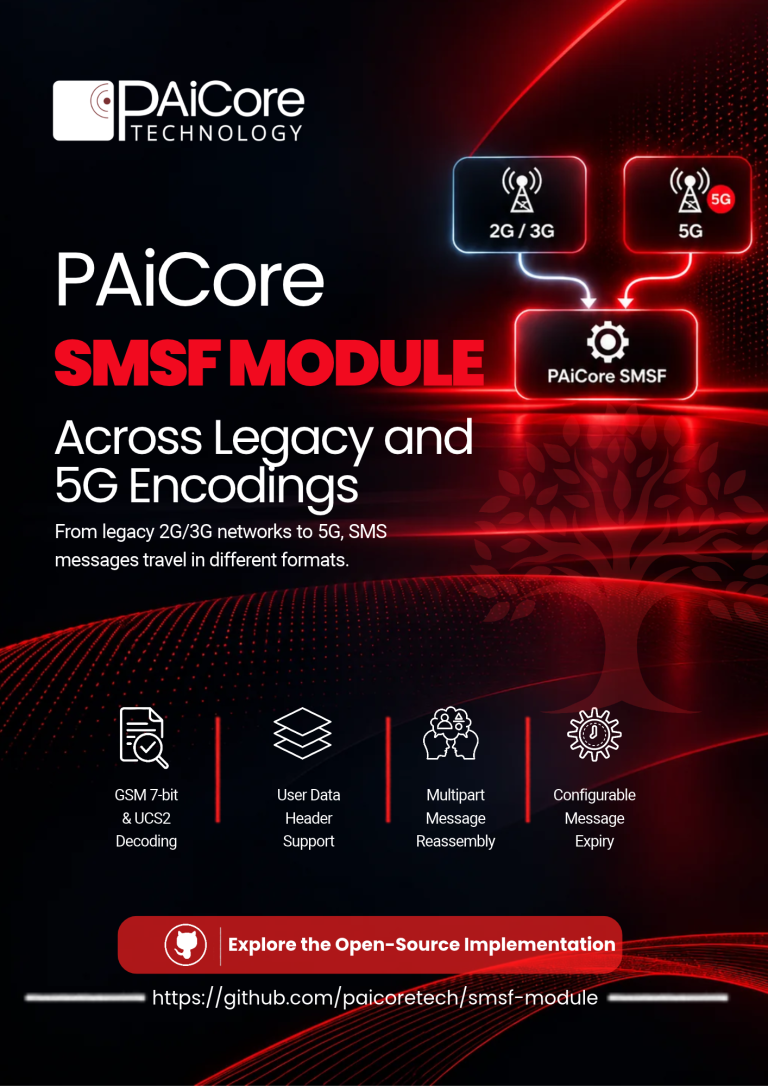
The module uses standardized 3GPP service-based interfaces, including Nsmsf_SMService, Namf_Communication, and Nudm_UECM.
Standard interfaces let operators integrate the SMSF with AMF and UDM functions from different vendors, which reduces lock-in.
This interoperability is important when operators are looking to maintain flexibility across their network architecture and avoid being dependent on a single vendor for core network functions.
Deployment Flexibility
The module runs on any Linux-based virtual environment.
PAiCore tests and optimizes it for public cloud, but operators can deploy it on infrastructure they choose, including their own data centers, which keeps deployment decisions with the operator.
This gives operators flexibility in how and where they deploy the SMSF based on their infrastructure requirements and operational strategy.
Whether an operator chooses public cloud infrastructure or its own data center, the deployment decision remains with the operator.
Sovereignty Also Has Operational Requirements
Sovereignty also has operational requirements.
Open source does not remove the need for skilled engineers, hardware planning, and professional support. Running a critical telecom core function requires the appropriate technical expertise, infrastructure planning, monitoring, maintenance, and operational readiness.
PAiCore offers Technical Support Plans for operators that want that assurance, while retaining the open-source foundation.
This approach allows operators to retain the benefits of an open-source foundation while having access to professional support when required.
Building Greater Control into the 5G Core
Digital sovereignty is increasingly becoming part of how telecom infrastructure investment and architecture decisions are evaluated.
For operators, sovereignty is not simply about where infrastructure is hosted. It also involves understanding who controls the software, how the software can be inspected and maintained, how quickly vulnerabilities can be addressed, and how easily infrastructure components can be integrated or replaced.
The SMSF is one of those core functions.
By combining an open-source foundation, standardized 3GPP interfaces, deployment flexibility, and optional professional support, PAiCore’s SMSF Module v1.0.0 gives operators greater control over how SMS is handled within the 5G Core.
Explore PAiCore SMSF Module
Product Page:
https://paicore.tech/platforms/messaging/smsc-smsf/
GitHub:
https://github.com/paicoretech/smsf-module
News Source:
Reuters, “Bid target Telecom Italia first-quarter core profit down 2.7%,” 6 May 2026
Reuters / MarketScreener source