
Device Binding: Turning the Smartphone into a Secure Hardware Key
By PAiCore Technology ● 2 min read
In today’s security ecosystem, Device Binding has become a cornerstone for mitigating Account Takeover (ATO) fraud. This technique establishes a unique and persistent relationship between a user’s account and their physical hardware, ensuring that credentials are only valid when presented from an authorized terminal.
By anchoring a digital identity to the phone’s physical elements, security shifts from relying solely on what a user knows (like a password) to what the user possesses (their verified device).
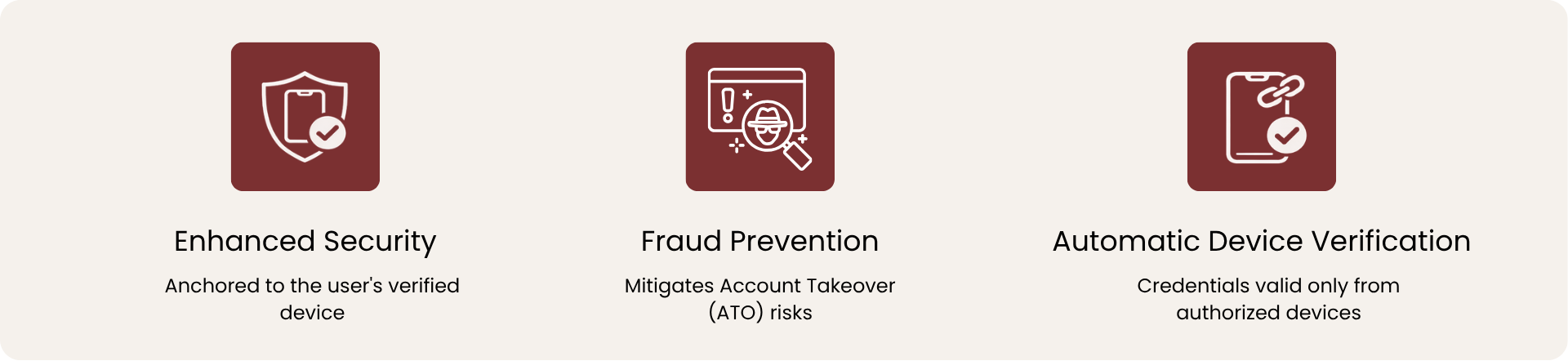
This binding method leverages mobile network infrastructure to transform the smartphone into an invisible security token, providing three critical benefits for authentication architecture:
Mitigation of remote attacks
Even if an attacker obtains a user's credentials, access is blocked because they lack the physical device linked to the account.
Frictionless authentication
By deterministically recognizing the hardware, the system enables Silent Authentication flows that eliminate the need for additional verification steps in every session.
Ecosystem integrity
This allows for the immediate detection of accounts being used in new environments, emulators, or devices that do not meet security requirements.
The technical implementation of this “anchoring” typically relies on unique identifiers validated directly by the operator, such as IMEI or IMSI, or through cryptographic tokens stored in the terminal’s secure enclave.
The result is a bank-grade security layer that is completely invisible to the end user, removing the need for external authentication devices while guaranteeing that access is always legitimate.